
What is Concierge Medicine?
Lutanen Health, a concierge medical practice in Boston, offers a unique approach to health, wellness and primary care medicine. Here the enduring power of the bond between physician and patient…
 Dr. Julia Loewenthal, MD

March 18, 2026
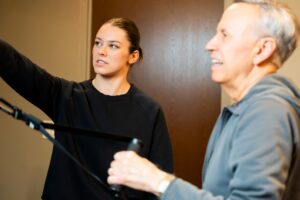
Traditionally, health has been assessed through measures such as blood pressure, laboratory testing, and other physiological markers. These all provide valuable insight into your internal physiology, but they only capture part of the picture.
Long-term health and independence depend on systems that are rarely measured in routine care: strength, balance, mobility, aerobic capacity, and cognitive performance. These capacities determine how well we move, think, and function as we age.
The Longevity Performance Assessment (LPA) was developed to evaluate these systems in a structured, objective way.
The LPA is a comprehensive assessment of the core systems that support long-term function, independence, and health outcomes. Using validated testing methods and age-referenced standards, the assessment quantifies:

Many of these capacities begin to change gradually and long before symptoms appear. Subtle reductions in balance, power, aerobic capacity, or neuromuscular coordination can often emerge years before they affect daily life. Without objective measurement, these changes often go unnoticed.
The goal of the LPA is not to chase maximal performance. Instead, it identifies asymmetries, inefficiencies, and early indicators that may influence long-term function. The assessment also establishes a clear baseline that can be revisited periodically, allowing changes in functional capacity to be tracked over time.
The LPA is designed for adults across the lifespan who want a clearer understanding of their functional health.
For adults in their 20s and 30s, the assessment establishes a high-quality baseline. Early measurement allows for longitudinal tracking and helps guide training decisions with greater precision.
For adults in their 40s and 50s, the LPA often identifies subtle shifts in balance, power, or aerobic capacity that may not yet be noticeable. Addressing these changes early can meaningfully influence long-term trajectory.
For adults in their 60s and beyond, the focus increasingly shifts toward maintaining independence and reducing risk. Objective metrics help clarify fall risk, strength thresholds, aerobic sufficiency, and cognitive-motor integration.
Following the assessment, results are reviewed and translated into an individualized strategy. Depending on the findings, this may include:
For members of Lutanen Health, the Longevity Performance Assessment is integrated into ongoing care and serves as a structured foundation for long-term health planning. If you are interested in becoming a member, we invite you to connect with us.
About the Author:
Kaylee LeCavalier is a Doctor of Physical Therapy and board-certified Sports Clinical Specialist who leads Lutanen’s Human Performance Lab. Her work integrates physical therapy, performance training, and healthy home design to support resilience, recovery, and long-term physical longevity.

Kaylee LeCavalier PT
March 18, 2026
Lutanen Health, a concierge medical practice in Boston, offers a unique approach to health, wellness and primary care medicine. Here the enduring power of the bond between physician and patient…
Dr. Julia Loewenthal, MD
In a society with ever-evolving health trends, and information, navigating between both traditional medicine and integrative medicine may feel overwhelming. Visits with your primary care physician may appear rushed with…
 Dr. Jay Luthar, MD, DipABLM
In recent years, an interest for longevity and healthy aging has increased, bringing about various wellness trends, breakthrough diagnostics and a growing public awareness around healthy living. Supplements, fitness routings…
Dr. Jay Luthar, MD, DipABLM

Designed for you.
Contact
Address
607 Boylston St. Suite 301
Boston, MA 02116
© 2026 Lutanen Health
