
What is Concierge Medicine?
Lutanen Health, a concierge medical practice in Boston, offers a unique approach to health, wellness and primary care medicine. Here the enduring power of the bond between physician and patient…
 Dr. Julia Loewenthal, MD

August 5, 2026

Diet, sleep, and exercise aren’t the only pillars of a long, healthy life. Taking the time to nurture quality relationships — and daring to form new ones — matters just as much.
The social connectedness (or lack of it) you feel every day is a critical part of your health. It’s a major factor that affects how long you live. Research has found that social factors contribute up to 80% of your health and well-being.
Yet 1 in 6 people around the world experiences loneliness, according to the World Health Organization (WHO).
The former U.S. surgeon general, Dr. Vivek Murthy, called loneliness one of the top threats to U.S. health, citing research that it can be as harmful as smoking 15 cigarettes a day.
This social disconnection is a wider issue, not just a personal one. Still, there’s a lot you can do in your own life to improve your social health. Making an intentional effort to connect with others can go a long way.
There’s no magic pill to make you live longer, but having healthy social connections comes close. Social health — having enough high-quality relationships in your life to meet your needs for human connection — is now recognized as a key part of overall health.
Social health is central to how I approach patient care, and the way we work at Lutanen.
“The whole human experience matters,” emphasizes my colleague Dr. Jay Luthar, MD, DipABLM, Founder and Medical Director of Lutanen Health.
He puts this into practice with his patients. “For one of my older patients with depression, we were not just looking at medications, but also exercise, and helping her connect to volunteering in her community.”
The more researchers have studied the health effects of socializing, the more benefits they’ve discovered.
Studies have shown that socializing lowers stress. Levels of your stress hormones, like cortisol and epinephrine, fall, setting off a virtuous chain reaction that brings down inflammation throughout your body.
This is a good thing, because chronic inflammation can put you at a higher risk of illnesses including diabetes, cancer, heart disease, neurodegenerative diseases, and more. Socializing, on the other hand, reduces your risk of these conditions.
Having strong, supportive social connections also reduces anxiety and depression, and it improves your cognition and brain health.
Another way your social connections can improve your health outcomes is through the practical support they provide.
For example, if you fall and your neighbor comes to help you, that’s social support in action. Your outcome after a fall, or with any other health issue, can really depend on the people available to help you in the moment.
A healthy social life means having enough people in your network, interacting with them regularly, feeling like they support your needs, and experiencing your relationships as positive rather than stressful.
What that looks like is different for everyone.
Let’s dig into the contributing factors:
Many aspects of your lifestyle can play a role, including your marital status, who you live with, and whether you’re active in social groups, among many others.
How you perceive your relationships is crucial. Loneliness is the subjective feeling of distress that happens when your social relationships aren’t meeting your needs for connection. One person might feel lonely in a situation that might not bother another.
Yet feeling lonely can have concrete effects, negatively affecting your health and lifespan over time.
Conversely, perceiving you’re supported by the people around you is linked to better health and a longer life.
You also need a variety of relationships with people who play different roles for you, so you get all the kinds of support you need.
For example, if you know a lot of people but nobody gives you emotional support, your social network may not be meeting your needs and you might still feel lonely.
I often ask my patients to do a simple exercise to assess their social health. In this exercise you map out your relationships on paper in a simple web diagram, listing everyone in your social network. Draw closer connections closer to your name and more distant connections farther away on the page.
You can also use the diagram to show the strength and type of each relationship, and whether you’re giving or receiving support in it.
Doing this exercise can help you visualize your social support system and tell you a lot about what could improve.
Even if you don’t see your doctor often, the relationship you have with them is an important one that can directly improve your health outcomes.
One meta-analysis found that training clinicians to improve their relationships with patients led to a variety of health improvements. Patients showed better smoking quit rates and weight loss, and lower anxiety, depression, pain, and blood pressure.
In other words, having a good relationship with your doctor may have all kinds of positive benefits for your health.
Just meeting and talking can be really helpful, even if you’re not receiving a direct medical treatment. Having that trusting relationship is key.
At Lutanen, we put the clinician-patient relationship front and center.
“At its core, medicine is one person caring for another,” says my colleague Dr. Jay. “You can’t shortcut the trust that creates, and that deep knowing of our patients lets us personalize the medicine we deliver.”
Small, consistent actions — like greeting a neighbor, joining a group activity, or scheduling regular calls with friends — can meaningfully strengthen your social connections and support your social health over time.
Here are a few research-backed actions that help.
Choose the ones that feel like a good fit and tweak them to suit your needs and lifestyle. Any way you enjoy getting social helps.
This one doesn’t have to be complicated. Simply saying hi to your neighbors when you run into them is a powerful way to feel a greater sense of belonging where you live over time.
Research shows that weaker social ties may contribute significantly to well-being. Those are the people you meet in passing regularly but don’t know very well, like your neighbors, your mechanic, or your local barista.
Detaching from the digital world will help you connect with the people around you. Some of my patients and their families have a rule to put their phones into a fishbowl or drawer at the front door as soon as they come home.
If you do need to keep your devices by your side, adjust the do-not-disturb settings so that you only get notifications during your off-time when it’s urgent.
Or try making a rule to check your messages just once an hour, not the moment you get them.
Hug someone you care about (with consent, of course). Giving and getting safe, caring touch is one of the most important ways we socialize with people we care about. It’s also critical to your physical and mental health.
One analysis of 212 studies found that physical touch reduced depression, anxiety, and even pain in adults. Interestingly, touch from a health care professional was just as beneficial as touch from a familiar person.
Research shows that performing acts of kindness can improve your well-being.
This can be as simple as holding the door open for a stranger, or doing chores for your family without being asked.
Consider volunteering at an organization you care about. Not only will you feel good. You’ll also connect with other like-minded people.
If you feel lonely at work, chances are your satisfaction with your job is flagging and burnout may be just around the corner.
Your employer has a big role to play here — it’s not just on your shoulders to fix. But connecting with your work colleagues can help you build a trusting social network.
And if you’re an employer or manager, creating a more supportive and social environment for your team is an important way you can contribute to their well-being and performance.
If you don’t live with many people, it can be hard to socialize regularly. Joining a club, class, team, or other group could be the incentive you need. Group activities are great for your health and well-being.
Group singing, for example, is linked to reduced anxiety and depression and greater physical and mental health.
On the same note, playing team sports, no matter what kind, has many psychological benefits. It helps you build teamwork skills and develop a sense of camaraderie with your teammates.
Show up for your local soccer, football, badminton, or ping-pong classes or drop-in sessions. Join a running club. Play dodgeball. Do what you genuinely enjoy.
Getting active informally is also a great way to spend time with people you care about. For example, you can invite a friend to join you for a walk instead of sitting together.
If you love reading, talking about what you read with others can be a wonderful experience. An informal book club works too. A chat with a friend about what you’re reading can be just as enriching.
Taking part in activities that meet your intellectual needs can help you fulfil that side of you.
It can be easy to let weeks, months, or even years go by without talking to the people you care about most. Yet these are some of your most important relationships.
Setting up regular plans — like a monthly phone call — can help keep these special people in your life.
If you feel your blood pressure rising around certain people, chances are something about them is making your stress levels spike.
Occasional conflicts are normal in every relationship, but if certain relationships are causing you frequent stress, it can hurt your health over the long-term.
Managing difficult relationships can be complicated. If you need support, speak with your doctor or a mental health care professional.
Here are answers to some common questions about how social health can help you live longer.
Social health is when you have enough high-quality relationships in your life to meet your needs for human connection. It’s an important part of overall health.
Yes. A review of more than 1,400 studies found that inadequate social support is consistently linked with a greater risk of death.
Keep in mind that the quality of your relationships matters. Stressful relationships — like with people in your life that you perceive as critical or unreliable — may be harmful to your health.
There’s no magic number. Research suggests that the quality of your relationships matters more than how many people are in your network.
What counts is whether you feel supported — emotionally, practically, and in other ways — and whether your relationships feel more positive than stressful.
That can look different for everyone. One person might thrive with a small, close-knit circle while another might need a larger, more diverse group of people around them to feel connected.
Researchers have found that loneliness is strongly linked with poor health, stress, and depression.
Loneliness is when you feel distress because you don’t feel connected enough to others, whereas social isolation is when you have few social relationships and don’t get much social contact with other people.
Both social isolation and loneliness are associated with increased mortality. The good news is that you can take steps to address both.
Your social world isn’t separate from your physical one. They’re part of the same system.
When it comes to your health, making sure you get enough high-quality, supportive social interactions is just as important as a good diet, exercise, and sleep.
Find everyday ways to connect with the people around you and your whole body will benefit.
Bryan, B. T., Andrews, G., Thompson, K. N., Qualter, P., Matthews, T., & Arseneault, L. (2023). Loneliness in the workplace: A mixed-method systematic review and meta-analysis. Occupational Medicine, 73(9), 557-567. https://academic.oup.com/occmed/article/73/9/557/7591258
Campbell, Q., Bodkin-Allen, S., & Swain, N. (2022). Group singing improves both physical and psychological wellbeing in people with and without chronic health conditions: A narrative review. Journal of Health Psychology, 27(8), 1897-1912. https://journals.sagepub.com/doi/full/10.1177/13591053211012778
Curry, O. S., Rowland, L. A., Van Lissa, C. J., Zlotowitz, S., McAlaney, J., & Whitehouse, H. (2018). Happy to help? A systematic review and meta-analysis of the effects of performing acts of kindness on the well-being of the actor. Journal of Experimental Social Psychology, 76, 320-329. https://www.sciencedirect.com/science/article/pii/S0022103117303451
Delgado, M. R., Fareri, D. S., & Chang, L. J. (2023). Characterizing the mechanisms of social connection. Neuron, 111(24), 3911-3925. https://www.cell.com/neuron/fulltext/S0896-6273(23)00699-2
Doyle, D. M., & Link, B. G. (2024). On social health: History, conceptualization, and population patterning. Health Psychology Review, 18(3), 626-655. https://www.tandfonline.com/doi/full/10.1080/17437199.2024.2314506
Holt-Lunstad, J. (2022). Social connection as a public health issue: The evidence and a systemic framework for prioritizing the “social” in social determinants of health. Annual Review of Public Health, 43(2022), 193-213. https://www.annualreviews.org/content/journals/10.1146/annurev-publhealth-052020-110732/
Huxhold, O., Fiori, K. L., Webster, N. J., & Antonucci, T. C. (2020). The strength of weaker ties: An underexplored resource for maintaining emotional well-being in later life. The Journals of Gerontology: Series B, 75(7), 1433-1442. https://academic.oup.com/psychsocgerontology/article/75/7/1433/5735647
Kelley, J. M., Kraft-Todd, G., Schapira, L., Kossowsky, J., & Riess, H. (2014). The influence of the patient-clinician relationship on healthcare outcomes: A systematic review and meta-analysis of randomized controlled trials. PLOS ONE, 9(4), e94207. https://journals.plos.org/plosone/article?id=10.1371/journal.pone.0094207
Martín-Rodríguez, A., Gostian-Ropotin, L. A., Beltrán-Velasco, A. I., Belando-Pedreño, N., Simón, J. A., López-Mora, C., … & Clemente-Suárez, V. J. (2024). Sporting mind: The interplay of physical activity and psychological health. Sports, 12(1), 37. https://www.mdpi.com/2075-4663/12/1/37
Murthy, V. H. (2023). Our epidemic of loneliness and isolation: The U.S. Surgeon General’s advisory on the healing effects of social connection and community. U.S. Department of Health and Human Services. https://www.hhs.gov/sites/default/files/surgeon-general-social-connection-advisory.pdf
Packheiser, J., Hartmann, H., Fredriksen, K., Gazzola, V., Keysers, C., & Michon, F. (2024). A systematic review and multivariate meta-analysis of the physical and mental health benefits of touch interventions. Nature human behaviour, 8(6), 1088-1107. https://www.nature.com/articles/s41562-024-01841-8
Vangelov, K., Dobson, E., & Graham, C. (2025). Relationship quality & longevity: Do support & strain from friends, families, & intimate partners predict lifespan? Behavioral Science and Policy, 11(2). https://journals.sagepub.com/doi/10.1177/23794607251388787
Vila, J. (2021) Social support and longevity: Meta-analysis-based evidence and psychobiological mechanisms. Front. Psychol. 12, 717164. https://www.frontiersin.org/journals/psychology/articles/10.3389/fpsyg.2021.717164/full
World Health Organization. (2025, June 30). Social connection linked to improved health and reduced risk of early death. https://www.who.int/news/item/30-06-2025-social-connection-linked-to-improved-heath-and-reduced-risk-of-early-death
About the Author:
Dr. Julia Loewenthal is an internist and geriatrician at Lutanen Health specializing in integrative primary care and healthy aging. Board certified in Internal and Geriatric Medicine, she is an Assistant Professor of Medicine at Harvard Medical School and a faculty fellow with the Osher Collaborative for Integrative Medicine. Her work combines clinical depth, compassion, and mind-body expertise to support lifelong wellness.

Dr. Julia Loewenthal, MD
August 5, 2026
Lutanen Health, a concierge medical practice in Boston, offers a unique approach to health, wellness and primary care medicine. Here the enduring power of the bond between physician and patient…
Dr. Julia Loewenthal, MD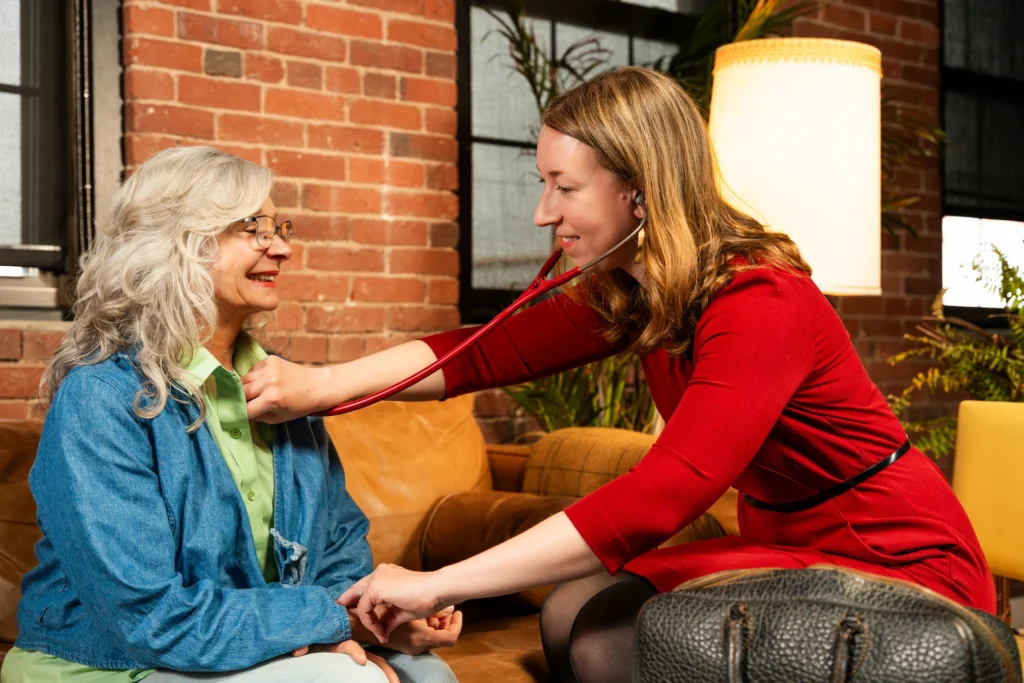
In a society with ever-evolving health trends, and information, navigating between both traditional medicine and integrative medicine may feel overwhelming. Visits with your primary care physician may appear rushed with…
 Dr. Jay Luthar, MD, DipABLM
In recent years, an interest for longevity and healthy aging has increased, bringing about various wellness trends, breakthrough diagnostics and a growing public awareness around healthy living. Supplements, fitness routings…
Dr. Jay Luthar, MD, DipABLM

Designed for you.
Contact
Address
607 Boylston St. Suite 301
Boston, MA 02116

© 2026 Lutanen Health
